
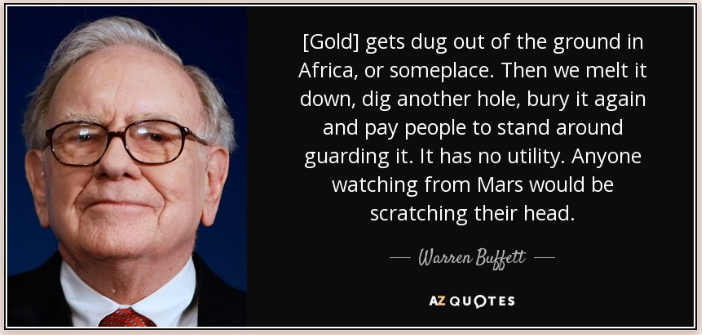
When I bought physical gold for the first time in 2024, it surprised some people — including myself who used to advocate Warren Buffett’s take on gold.
Gold doesn’t generate income. It doesn’t compound. It doesn’t fit neatly into the discounted cash flow models I’d spent years studying.
And yet, it felt inevitable.
The Wrong Lesson First
My first encounter with gold came during COVID-19.
Markets were crashing. Governments were printing money at unprecedented scales. I found myself asking a question I’d never seriously considered before: what actually holds value when systems are under stress?
I bought gold ETFs, rode the rally, and sold for a profit.
At the time, I thought I understood gold. I didn’t.
I understood gold as a trading vehicle. I had no understanding of its role as portfolio insurance or store of value.
That distinction took several more years — and a few formative books — to fully internalize.
What Shifted My Thinking
Few books arrived at different points in my investing journey but eventually connected. The most impactful book will be;
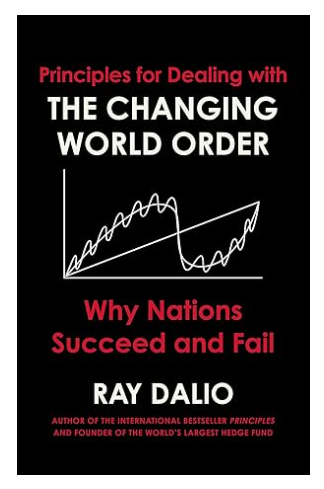
Ray Dalio’s The Changing World Order reframed gold entirely for me. Financial systems aren’t permanent — the Dutch guilder gave way to the British pound, which eventually yielded to the US dollar. Each transition felt unthinkable until it wasn’t. Gold was the constant that persisted through every regime change over the last hundreds of years of economic history.
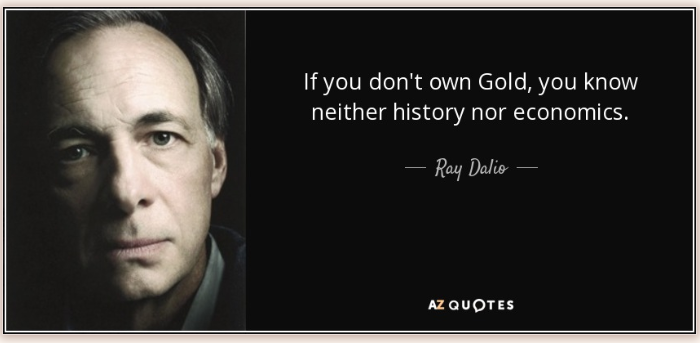
True diversification isn’t just different stocks. It’s fundamentally different asset types that respond differently to growth, inflation, deflation, and recession like the Ray Dalio’s All Weather Portfolio. That’s when I began seriously building positions across equities, bonds, real estate, cash, and alternatives. Each serving a distinct purpose.
Gold’s purpose was becoming clearer.
What Made It Urgent in 2024
Reading about long cycles was one thing. Watching them unfold in real-time was another.
Three overlapping forces made gold feel less optional: the gradual diversification away from dollar-dominated reserves by central banks globally, rising geopolitical multipolarity and the weaponisation of financial systems, and — the one that stays with me — the growing vulnerability of our increasingly digital monetary infrastructure.
Cyberattacks on banking systems aren’t hypothetical. They’re happening regularly. In a scenario where digital systems face serious compromise, bank accounts, investment portfolios, and even cryptocurrency all rely on functioning infrastructure that could be disrupted.
Physical gold doesn’t. It exists independent of electricity, internet connectivity, or institutional access. It’s the ultimate analog backup in a digital world.
I’m not predicting collapse. But I’m no longer willing to assume these risks are impossible.
Why Physical This Time
This is where my approach changed fundamentally.
During COVID, I bought gold ETFs — paper claims on gold held somewhere by someone. When I sold for a profit, I proved I understood gold as speculation.
In 2024, I bought physical gold. This proved I finally understood gold as insurance.
The difference matters more than it sounds. Physical gold sits outside the financial system in ways paper claims simply don’t.
No counterparty promises.
No dependence on institutions honoring obligations during a crisis.
No digital infrastructure required.
No intermediaries standing between you and the asset.
Simple. Unproductive. But durable, portable, and universally recognized across every culture and century.
Owning a small allocation wasn’t about expecting disaster. It was about acknowledging uncertainty without dramatising it. Insurance you hope never to need — but are grateful to have.
Gold as Behavioural Insurance
Here’s what I’ve come to understand: gold doesn’t just hedge portfolios. It hedges behaviour.
When markets are euphoric, gold feels boring and pointless. When markets are stressed, currencies wobble, or geopolitical tensions spike, gold feels stabilising.
That psychological ballast matters more than most investors admit.
During market volatility, my gold allocation didn’t make me wealthy — it kept me calm. That calmness allowed me to think clearly, avoid panic-selling, and deploy cash into opportunities when others were fearful.
The behavioural stability gold provides is worth far more than the opportunity cost of holding something “unproductive.”
The Minimalist Case for Gold
From a minimalist perspective, gold plays a narrow, well-defined role — and asks almost nothing of you in return.
No earnings calls to follow. No management decisions to second-guess. No quarterly reports. No technological disruption to worry about. No dependence on digital infrastructure staying functional.
It exists quietly. That restraint appealed to me.
In a portfolio designed for resilience rather than optimisation, every component should have a clear purpose. Gold’s purpose is stability during regime uncertainty and systemic stress — nothing more, nothing less.
One Honest Reflection
Gold more than doubled since 2024 — an outcome I didn’t anticipate and don’t expect to repeat.
That result creates its own temptation: to view gold differently now, to size it up, to let the recent performance reframe its purpose. I’ve resisted that. The allocation I hold today is nearly identical to what I bought.
Because the moment I start treating insurance as a growth asset, I’ve undermined the entire reason I own it.
The original thesis was discipline, not performance. Staying true to that — even when the numbers flatter you — is its own kind of investing lesson.
Part of a Larger Infrastructure
Adding gold didn’t make me pessimistic about productive assets. I still believe deeply in equities, real estate, and income-generating investments. They remain the core of long-term wealth building.
But I’ve become more humble about the range of possible futures — and more intentional about building a portfolio that can survive the ones I didn’t see coming.
Financial independence, as I’ve written in earlier parts of this series, isn’t about maximising returns. It’s about building infrastructure that supports the life you want to live.
Gold is a quiet piece of that infrastructure. It doesn’t ask for much attention. It doesn’t promise exceptional returns. It simply sits there — doing its job, so I can do mine.
This is a personal reflection on how I think about investing over time. It’s shaped by my own circumstances and priorities, and isn’t intended as financial advice. Everyone’s situation is unique, and what works for me may not work for you. Consider consulting with a qualified financial advisor for personalized guidance.